

Structure Characterization
for Faster Research
& Biomolecular Analysis
Learning for Efficiency
Spend Less Time on Data Management and More on Chemistry with a Unified Analysis Platform, Automation, and Machine Learning
Understanding a compound’s properties, reactivity, and potential applications begins with accurate structure characterization. This process typically involves multiple steps using techniques such as NMR, mass spectrometry, IR, UV-Vis, and Raman spectroscopy.
Many laboratories still rely on a fragmented approach: one software tool for NMR, another for MS, IR, and so on. This slows research, increases the risk of human error, and makes maintaining consistency and traceability difficult. For complex molecules, interpreting data becomes even more challenging. Analysts frequently encounter overlapping signals, low-concentration components, and ambiguous correlations across datasets, making structure determination time-consuming and error-prone.
SciY addresses these challenges with Mnova, a single, integrated platform for processing, analyzing, and visualizing NMR, MS, IR, UV-Vis, and Raman data. With dedicated tools for molecular structure analysis, verification, and both 2D and 3D elucidation, Mnova allows scientists to work seamlessly across techniques in a unified environment.
Mnova also offers automation to standardize and streamline routine tasks. This not only improves consistency but also enables batch processing or real-time structure analysis as data is acquired. Additionally, machine learning tools assist with structure prediction and data interpretation, helping chemists turn complex datasets into actionable insights more efficiently.
With SciY, chemists can focus on scientific discovery rather than data management, accelerating research while ensuring accuracy and confidence in every structural analysis.
What can Mnova do for Structure Characterization?
Accelerating Accurate Structure Identification
Mnova Verify speeds up and improves structure identification by bringing together data from NMR (with Mnova NMR), LC/GC-MS (MSChrom), and other spectroscopic techniques (ElViS) in one platform. Proposed molecular formulas can be checked against both experimental and predicted spectra reducing errors and building confidence in the results. By consolidating analysis into a single workflow, Mnova improves consistency, saves time, and allows chemists to focus on interpreting results instead of juggling multiple tools.
Efficient Structure Elucidation with CASE Technology
Mnova Structure Elucidation leverages advanced Computer-Assisted Structure Elucidation (CASE) technology, using sophisticated algorithms to interpret NMR data and propose possible molecular frameworks. It helps researchers uncover complex structures by analyzing spectral data and generating potential structural candidates, ensuring a thorough and reliable elucidation process.
3D Configurational & Conformational Analyses
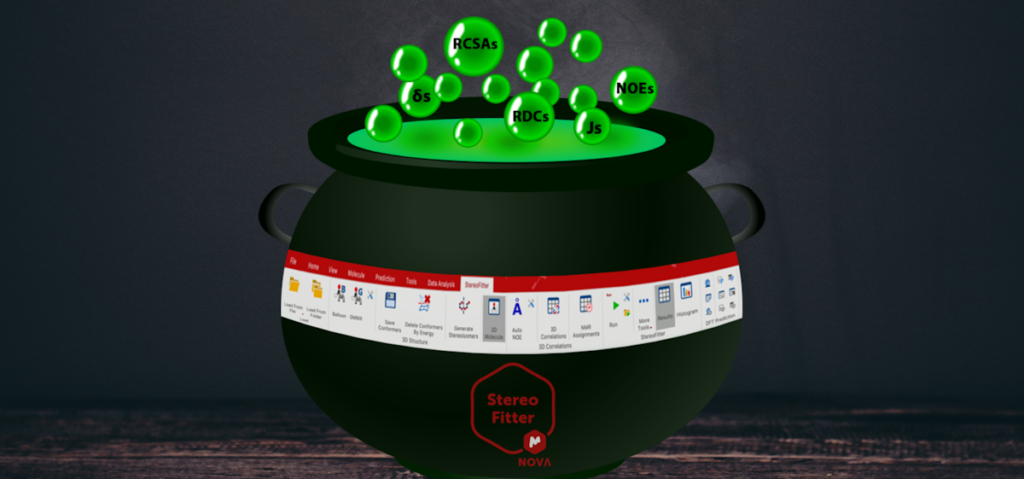
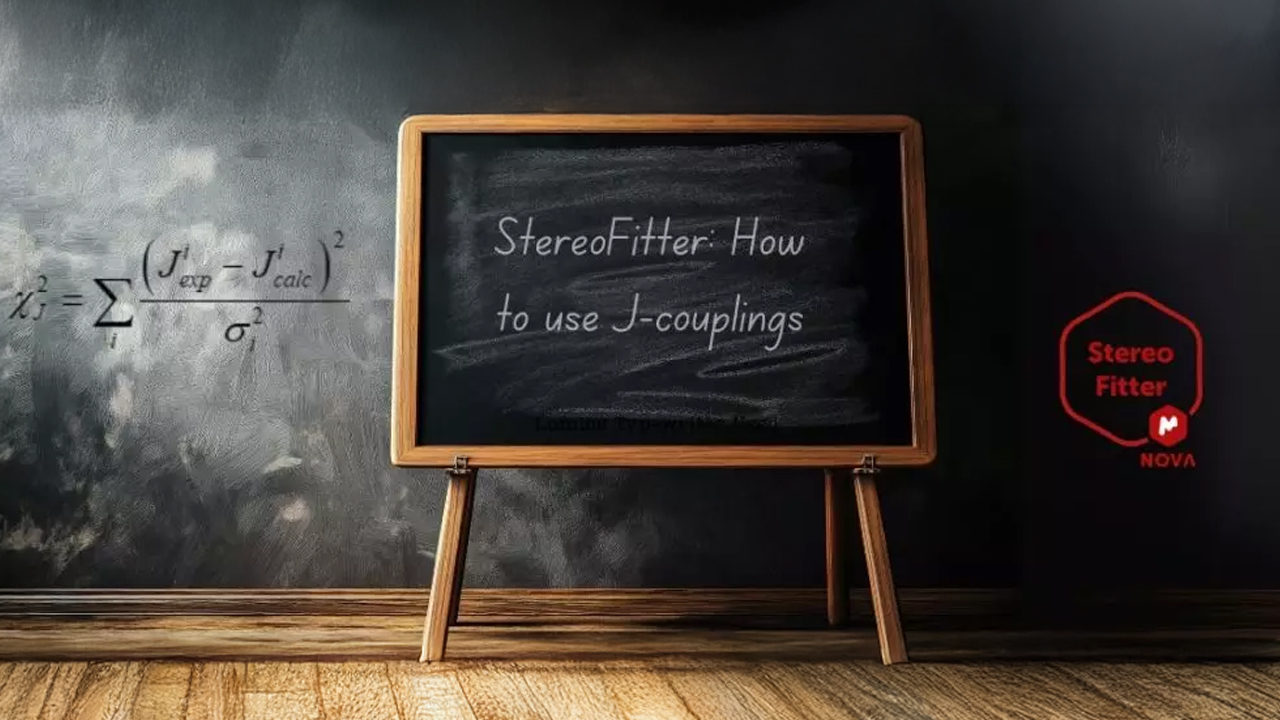
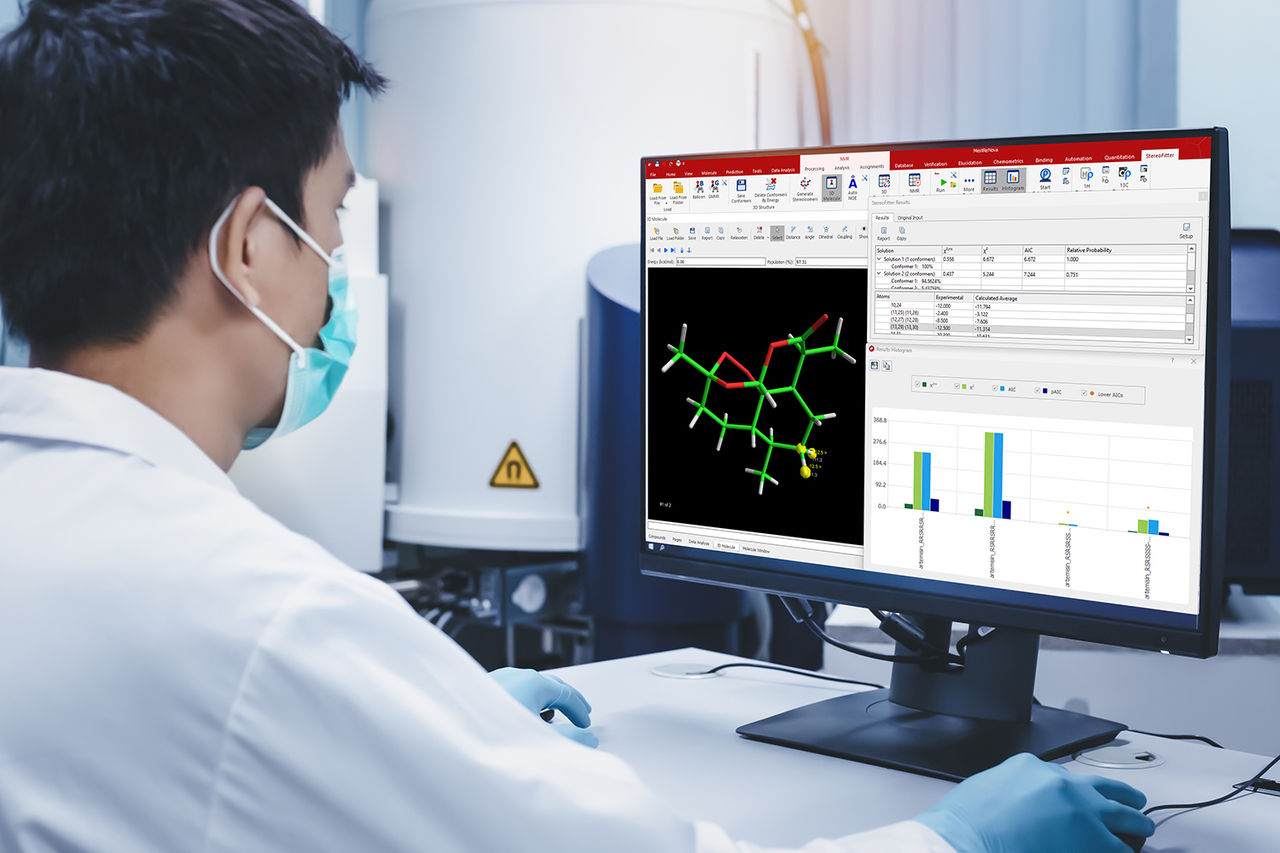
Interpret stereochemistry from NMR data, including NOEs, RDCs, and J-coupling constants, using Mnova StereoFitter to analyze the spatial arrangement of atoms, resolve chiral centers, and distinguish stereoisomers. By combining NMR data with computational modeling, Mnova StereoFitter also enables conformational analysis, revealing the preferred geometries molecules adopt in solution.
Structural Analysis of Large Biomolecules
Analyze the higher-order structures of large biomolecules, including proteins and nucleic acids, using Mnova BioHOS to gain insights into their complex architectures and to understand biomolecular functionality, dynamics, and interactions. By combining NMR data with advanced computational analysis, Mnova BioHOS provides a detailed view of macromolecular conformations and their structural relationships in solution, enabling researchers to interpret biological function and inform biopharmaceutical development.





Publications
- A CASE (Computer-Assisted Structure Elucidation) for Bench-Top NMR Systems in the Undergraduate Laboratory for De Novo Structure Determination: How Well Can We Do? J. Chem. Educ. 2022, 99 (11), 3780–3788 https://doi.org/10.1021/acs.jchemed.2c00475
- NMR Signal Processing, Prediction and Structure Verification with Machine Learning Techniques. Magn. Reson. Chem. 2020, 58, 512–519 https://doi.org/10.1002/mrc.4989
- A KNIME Workflow for Automated Structure Verification. SLAS Discov. 2020, 25 (8), 950–956. https://doi.org/10.1177/2472555220907091
- Application of Anisotropic NMR Parameters to the Confirmation of Molecular Structure. Nat. Protoc. 2019, 14, 217–247. https://doi.org/10.1038/s41596-018-0091-9
- Unequivocal Determination of Complex Molecular Structures Using Anisotropic NMR Measurements. Science 2017, 356, https://doi.org/10.1126/science.aam5349
- Chemical Shift Prediction in 13C NMR Spectroscopy Using Ensembles of Message Passing Neural Networks (MPNNs). J. Magn. Reson. 2024, 368, 107795. https://doi.org/10.1016/j.jmr.2024.107795
- NMR-based structural integrity analysis of therapeutic monoclonal antibodies: a comparative study of Humira and its biosimilars. mAbs, 2025, 17(1). https://doi.org/10.1080/19420862.2025.2551208

Have questions about our range of products or services? Don't hesitate to reach out for detailed explanations and guidance. Contact us today to start a conversation about how we can fulfill your needs efficiently.