
5 Signs Your Lab May Need a LIMS Sooner Than You Think
Most small to mid-sized testing and QC labs don’t start with a LIMS. They start with what works: spreadsheets, emails, shared folders, and informal processes.
And for a while, that approach is enough.
But as testing demand increases, expectations around quality and traceability rise, and teams grow, these “temporary” systems begin to show their limits.
Here are five indicators that your lab may be closer to needing a structured system than it seems.
1. You still run your lab on spreadsheets
“I’m not sure which spreadsheet is the latest.”
Spreadsheets are flexible and familiar, which makes them a natural starting point. But they rely on manual updates, version control discipline, and individual ownership.
As more people contribute, clarity becomes harder to maintain. Multiple versions circulate, changes are not always visible, and confidence in the data starts to erode.
2. Work is tracked through emails, meetings, or informal conversations
“Is this sample done yet?”
When sample status depends on inbox searches or verbal updates, visibility is limited. Teams spend time chasing information rather than progressing work.
This becomes more challenging as volumes grow and handoffs increase. Without a shared, structured view, coordination relies heavily on people remembering and relaying information.
3. Approvals are manual, informal, or hard to evidence
“Let me print that email to prove I got clearance.”
In many labs, approvals exist, but they are not consistently captured in a structured way. Emails, screenshots, or printed records become the default proof.
This creates friction during audits or reviews, where traceability and clarity are expected. The process works, but it requires effort to reconstruct.
4. The same sample is entered multiple times
Different systems. Different people. Different versions of the truth.
Manual data entry across tools introduces duplication and inconsistency. Each re-entry creates an opportunity for errors and misalignment.
Over time, it becomes difficult to determine which data point is the correct one—and reconciling discrepancies adds unnecessary workload.
5. Scaling the lab increases complexity—not efficiency
More samples often mean more emails, more spreadsheets, and more manual coordination.
What once felt manageable becomes harder to control. Processes that relied on individual oversight or informal communication no longer scale effectively.
This is a workflow challenge, not a team problem
When processes depend heavily on manual coordination, memory, and disconnected tools, even well-organized teams face increasing friction as they grow.
The challenge is not capability—it is the absence of a system designed to support consistent, traceable workflows.
These challenges are also reflected in broader industry expectations. International standards such as ISO/IEC 17025—the global reference for testing laboratories—require controlled processes, clear handling of samples, traceability of data, and documented workflows to ensure reliable results.
While spreadsheets and emails may support early operations, they make it increasingly difficult to maintain this level of consistency and traceability as volume and complexity grow.
A practical step toward structured, digital workflows
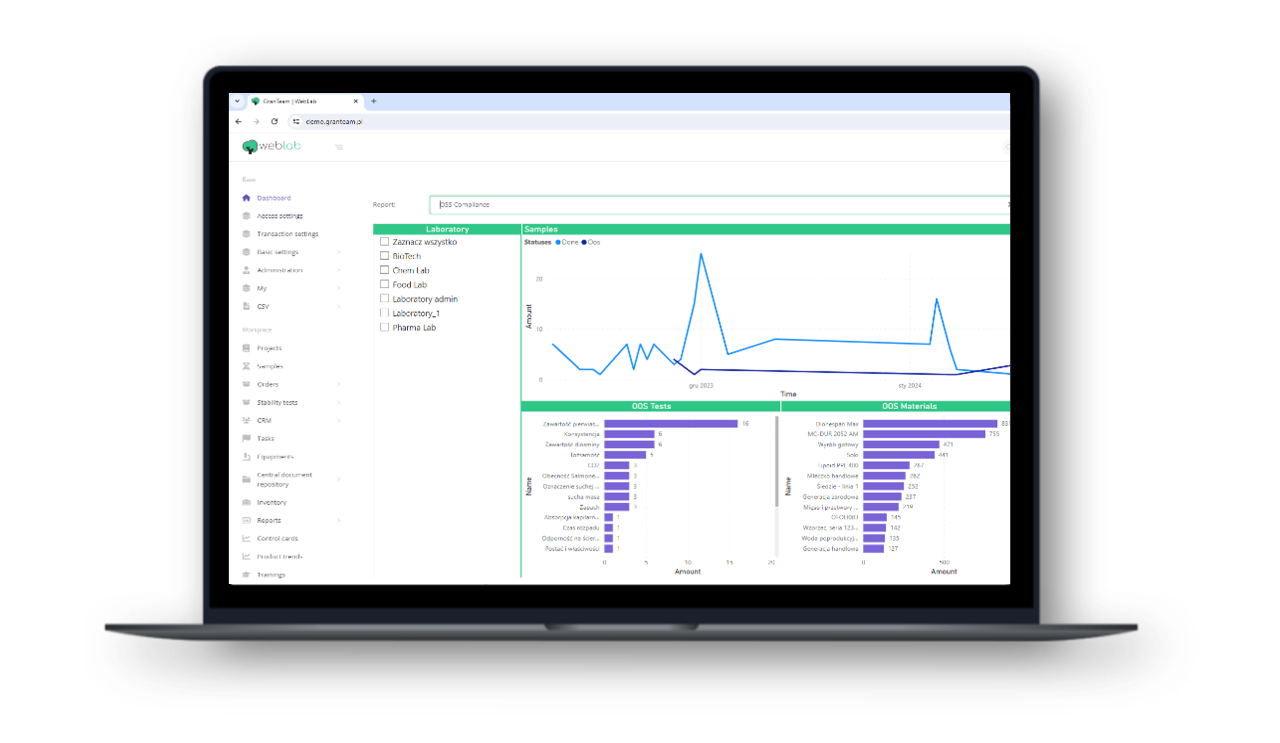
WebLab is designed for labs that have outgrown manual and fragmented processes, but are not looking for a complex or heavy implementation.
It provides a structured environment for:
- Clearer sample tracking
- Reduced manual handoffs
- More consistent reporting
- Better support for day-to-day lab activities
With a web-based experience built for regular use, it helps labs transition toward digital workflows in a way that fits their current scale and needs.