
WebLab

LIMS Built for modern labs — fast, flexible, and compliance-ready

About WebLab

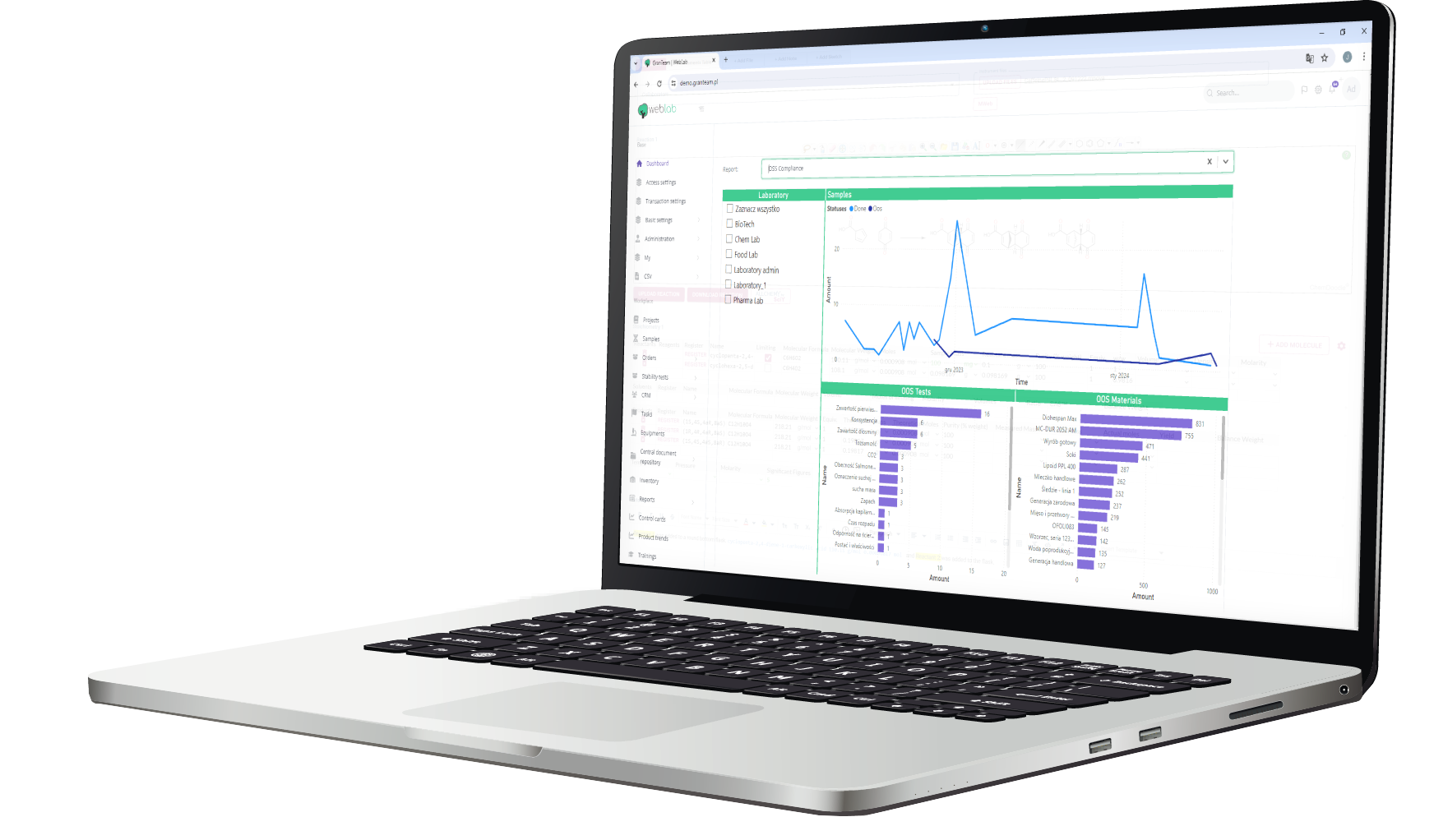
WebLab is a modern, API-based Laboratory Information Management System (LIMS) designed to enhance efficiency, ensure data integrity, and streamline laboratory operations. Built on open technology, it enables flexible integration with existing systems while delivering fast and reliable performance. With WebLab, laboratories can transition to a paperless, highly productive environment. Its secure, web-based access allows for the centralized management of all laboratory data and documentation across multiple sites and multilingual teams, ensuring smooth workflows and regulatory compliance.

Modern Technology
100% API-based, open, and cloud-ready architecture for seamless integration
Blazing Speed
Workflows respond instantly, screens load in a flash, and users enjoy a smooth, frustration-free experience every step of the way
Built for Agility
Quickly adapt to new business needs with ready-to-use library components including ELN, LES, DMS and a Client Portal
Compliance First
Ensures your laboratory adheres to data integrity and ALCOA+ principles

Benefits

Increased Productivity and Streamlined Operations: Automation of routine checks, validation of requirements, reports, and documentation ensures seamless work and data flows, reduces the need for manual data tasks, and ultimately boosts productivity.

Easier Growth and Collaboration Through Digitalization: LES and ELN modules let you record all QC and R&D activities directly in a web-based system, eliminating paper, improving traceability, and making it easy to share information and collaborate in real time from anywhere.

Proactive Process Control and Faster Issue Resolution: Features like real-time work progress visualization and instant notifications enable continuous monitoring of lab activities, allowing teams to respond quickly to issues. Configurable control cards and support for machine learning models help detect anomalies early and accelerate corrective actions.

Better Equipment and Inventory Management: Resource management features and real-time notifications ensure optimal usage of resources, reducing waste and ensuring timely replenishment of supplies.

Regulatory Compliance: Controlled oversight of laboratory activities, maintaining data integrity per ALCOA+ guidelines while meeting industry standards for secure records and quality assurance in testing and calibration labs (GxP and ISO/IEC 17025).

Data-Driven Lab Performance Improvement: Advanced query and configurable KPI modules provide valuable insights from stored data, enabling data-driven decision-making and continuous improvement.

Frequently Asked Questions

1. How does WebLab help reduce manual work and data entry errors?

WebLab integrates with laboratory instruments and systems (ERP, ELN, etc.) to capture data automatically, avoiding manual typing and reducing repetitive clicks. Data flows seamlessly across workflows and is readily available for automated reporting and reuse. The goal is simple: fewer handoffs, fewer transcription errors, and faster reporting, improving how scientists work.

2. How does WebLab handle governance, access rights, and audit readiness?

WebLab includes role-based access control, audit trails, e‑signatures, and support for data integrity principles such as ALCOA+. It also provides operational controls including granular permissions, training records and supervision, and structured QA/QC workflows (such as investigations and deviation alerts). Together, these capabilities help laboratories remain inspection‑ready while maintaining efficient day‑to‑day operations.

3. What type of laboratories benefit most from WebLab?

WebLab is designed for laboratories that need fast, compliant operations without heavy custom coding, including analytical and sample management focused labs, contract testing laboratories, and CDMOs. Its modular, flexible architecture allows organizations of different sizes and complexity to configure workflows to their needs. WebLab helps teams move away from paper, Excel, or legacy LIMS by centralizing data and documentation in a secure, web‑based system that supports multi‑site and multilingual environments.

4. I run a contract lab, how does WebLab help me serve clients?

WebLab is built to support contract laboratories managing multiple clients, workflows, data‑sharing requirements, and billing processes. It includes automated Certificate of Analysis (CoA) generation and an integrated customer portal that allows clients to place orders, track progress, review results, and download reports. For contract labs, WebLab also supports billing and invoicing workflows as well as structured sponsor/client communication, helping deliver results faster, more consistently, and with full traceability.
Read more: Why Contract Laboratories choose our LIMS

5. Can the system generate Certificates of Analysis automatically?

Yes. WebLab can automatically compile approved results into standardized reports, such as Certificates of Analysis (CoA), eliminating manual compilation and reducing release time while ensuring consistency and traceability.

6. Why is it important to replace a legacy LIMS?

Legacy LIMS platforms often rely on outdated technology, require extensive customization, and create integration challenges with modern instruments and systems. Over time, this slows operations, limits adaptability, and increases maintenance and long‑term operational costs.

7. What about legacy systems and data migration—is replacement realistic?

Yes, with a pragmatic approach. Most laboratories start by identifying high‑value data, phasing migration over time, and validating processes step by step. This minimizes disruption while enabling a transition to a more sustainable digital foundation. Our team of experts can help assess migration risks, extract data from legacy systems, and recommend strategies to preserve historical data and context.

8. What is the ROI of implementing a LIMS?

Implementing a LIMS can deliver measurable returns on investment (ROI) by reducing manual work, improving data quality, and streamlining laboratory workflows. Typical ROI drivers include faster sample processing, fewer errors and rework, improved compliance, and better use of laboratory resources. Over time, these gains outweigh implementation and maintenance costs, especially when replacing paper‑based processes or legacy systems.
Read more:  The ROI of LIMS

9. How do we build a convincing ROI or business case for leadership?

A strong business case combines measurable operational gains, such as reduced manual work, fewer errors and rework, faster throughput, and quicker reporting, with risk reduction, including data integrity and inspection readiness. Many teams start with quick wins by digitizing the most manual, error‑prone steps first, making value visible early and encouraging adoption. Our team helps identify inefficiencies, estimate potential ROI, and build a personalized analysis aligned with your lab’s processes and objectives. Contact us for a free ROI analysis.

Contact

Curious about our products or services? Let us provide you with the answers you need. Contact us today and discover how we can cater to your needs effectively.